Today, I had the opportunity to visit Ban Thung Mok in Chiang Ban Subdistrict, Chiang Kham District, Phayao Province, to meet the Ban Thung Mok Tai Lue Weaving Group. This is a collective of local women who weave the purple and gold sashes for the graduation gowns of University of Phayao students. Upon arriving, I was greeted by the rhythmic clacking of the looms, finding the women weaving together in a group and welcoming our team with warm smiles.
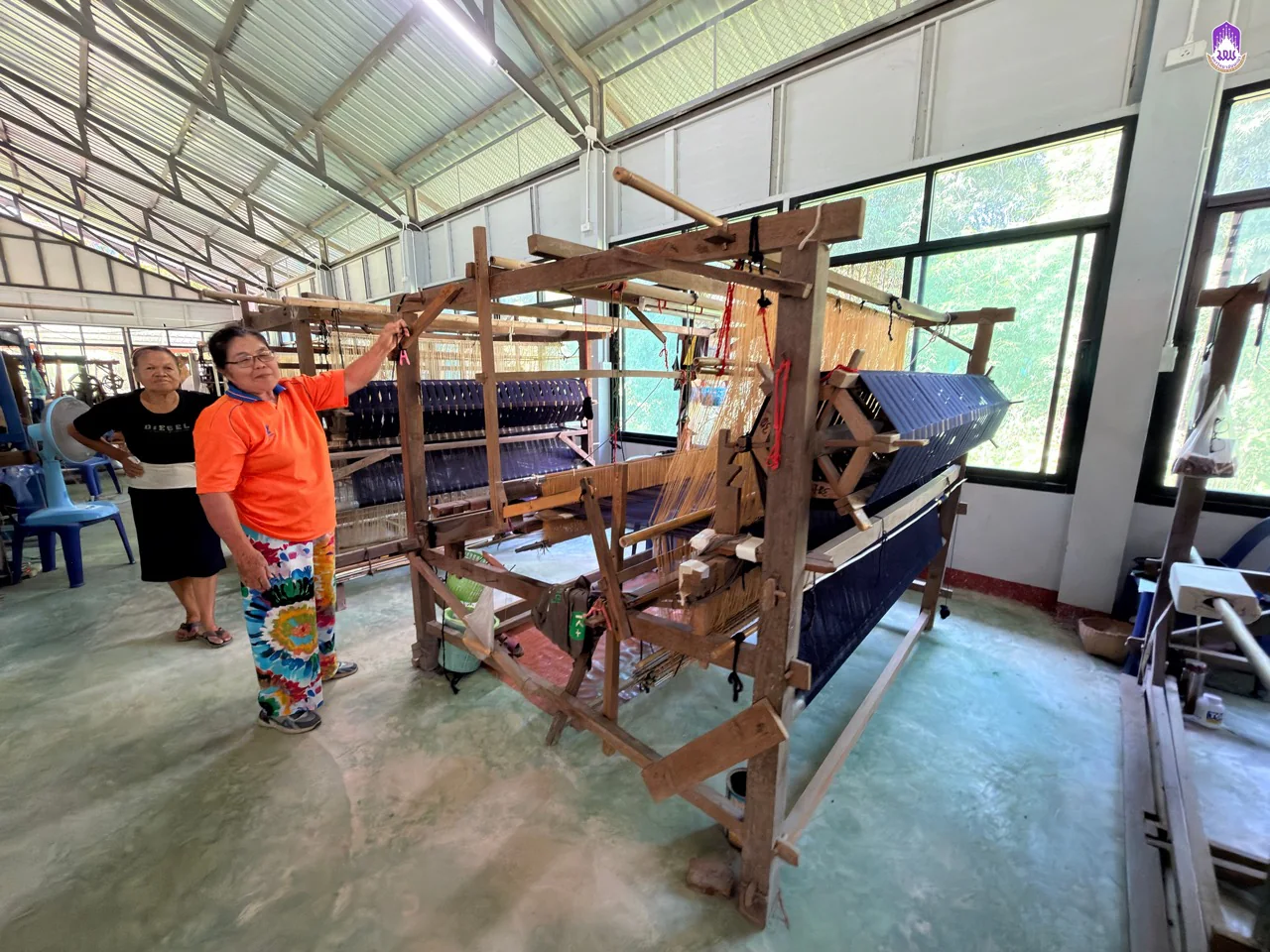
I didn't schedule any formal interviews. Instead, I simply walked around and chatted with the weavers at their looms; if someone's hands were free, we talked, and if they were busy weaving, I just stood by and watched.
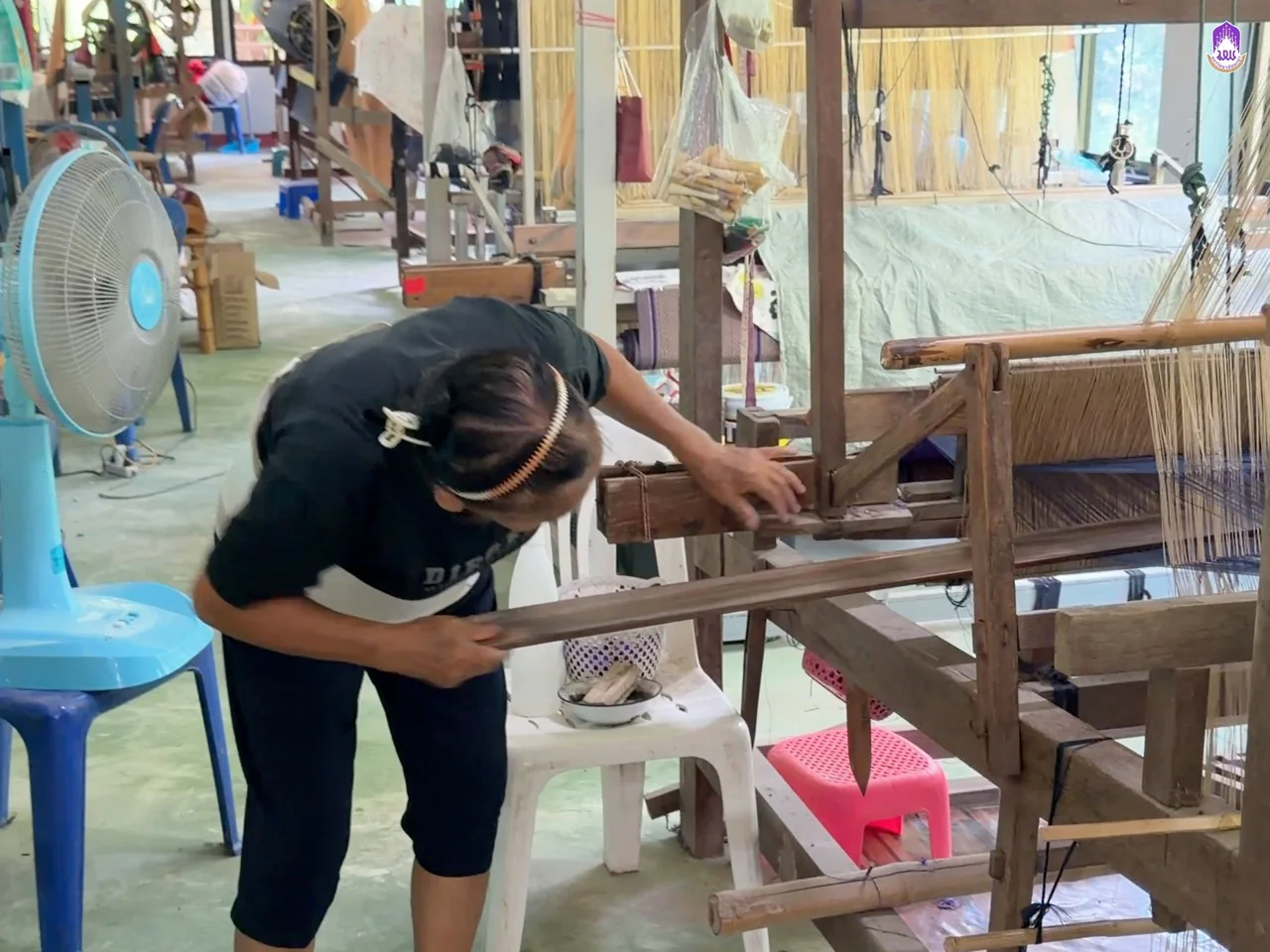
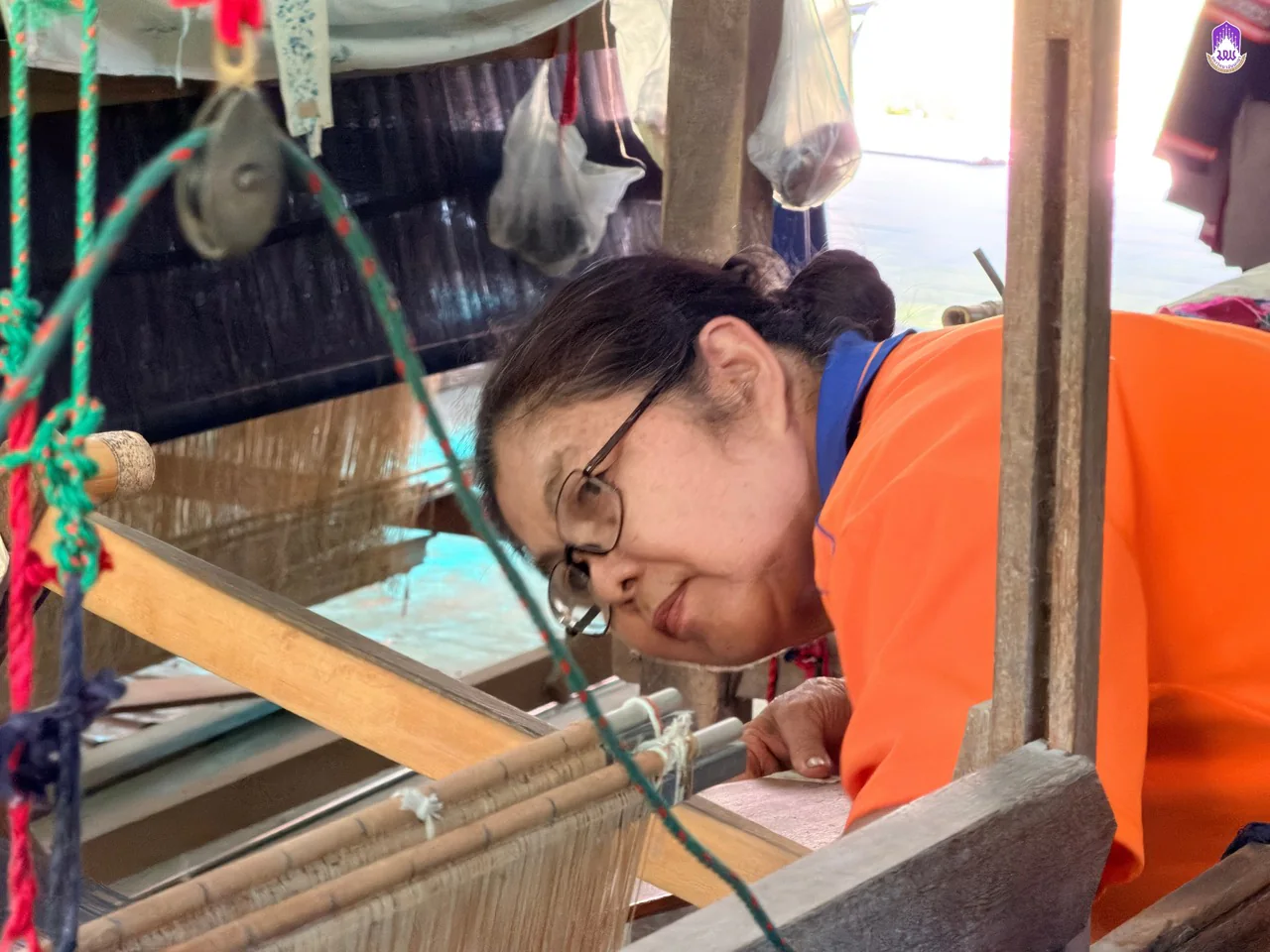
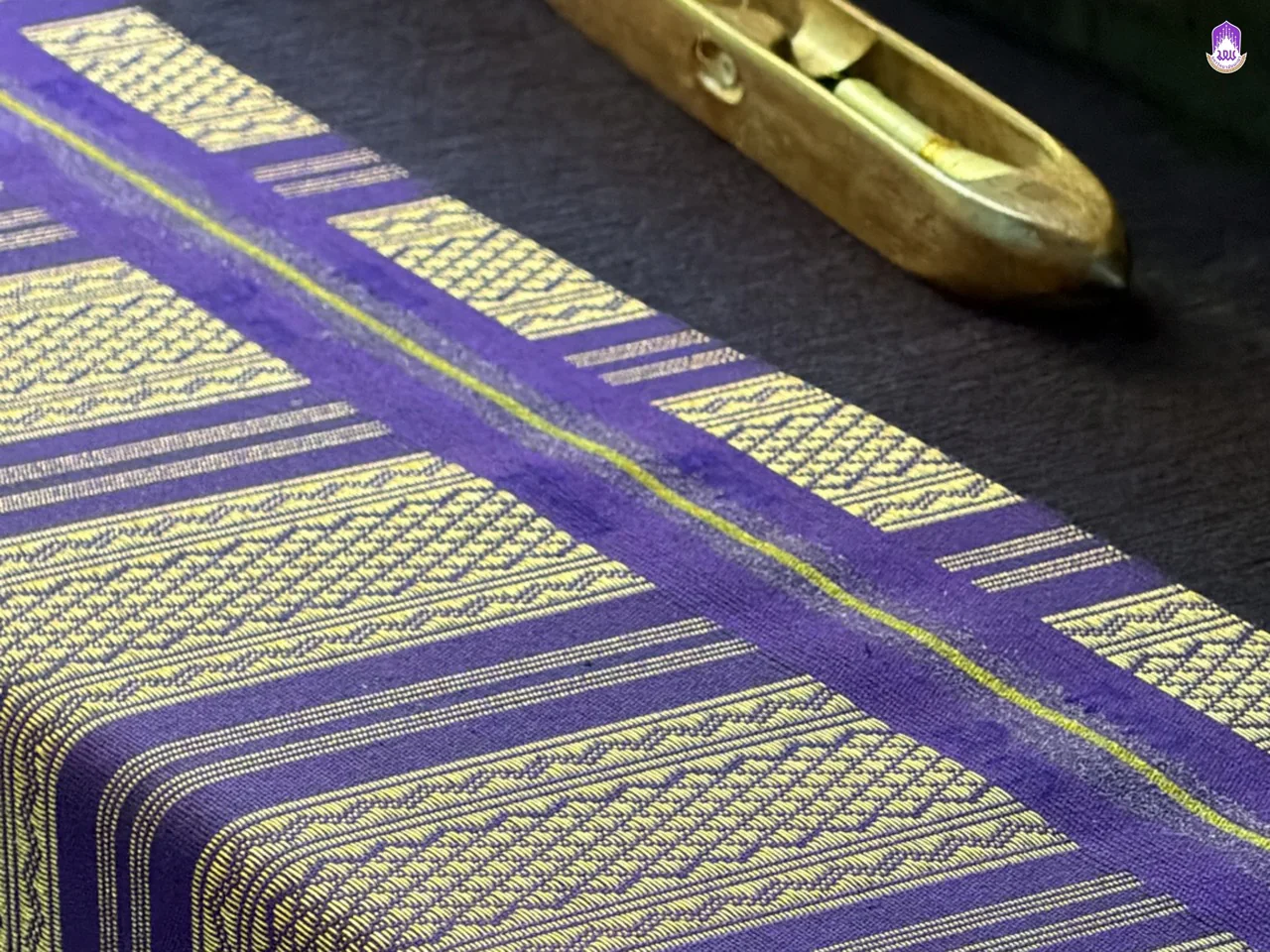
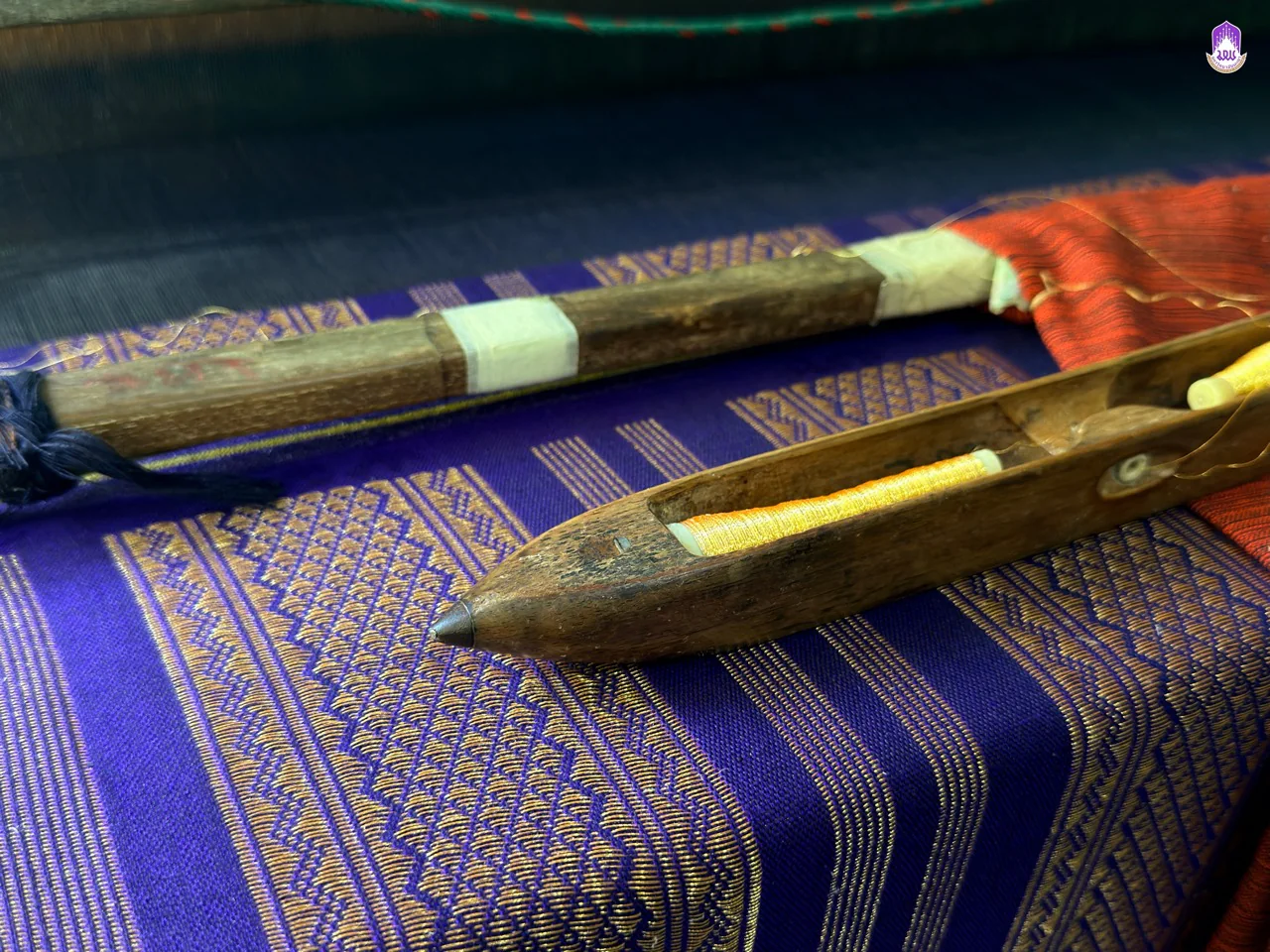
Before this visit, I thought weaving simply meant sitting at a loom and working continuously. However, seeing it firsthand, I realized it wasn't like that at all. The women hardly sat still at the loom; they constantly had to get up and walk around to adjust the loom and set up the patterns. After weaving for a bit, they’d have to stand up to switch patterns again, repeating this process all day until the piece was finished. This is the unique characteristic of the "Lai Tam Kao" pattern, which is featured on the university's graduation gowns. It is a geometric design created by a rhythmic sequence of weaving and treadling, reflecting traditional Tai Lue wisdom from Chiang Kham District that has been passed down through generations of antique blankets. Because they have to alternate between two thread colors-purple and gold, the university's official colors-each piece takes quite a long time to complete.
 |
 |
The pattern on this fabric has been inherited over a long time and was on the verge of disappearing from the community, as only a few people still knew how to weave it. The University of Phayao then stepped in to collaborate with the community through a research project under the "One Faculty, One Model"initiative. This was one of the early research efforts to explore local wisdom regarding Tai Lue woven fabrics. One of the pioneering projects likely came from the Faculty of Science, focusing on natural dyes. A group representative shared, "It's great that the university came in to support us, especially by providing knowledge, which has ultimately created a sustainable income for our group".
 |
 |
Regarding their income, the working process is quite interesting. The university needs these woven sashes every year, so a shop that manufactures the graduation gowns acts as the coordinator and places an annual order with the group. The order volume varies each year depending on the number of graduates. Once an order comes in, the work is divided equally among the group members. On average, each member earns about 20,000 to 30,000 baht per year just from weaving the gown sashes.
Most of the group members are primarily farmers, making weaving a supplementary source of income. They have been weaving these sashes since the university was first established. As the weavers explained, "Whenever we are free from other work or don't have orders for other types of fabric, we weave these gown sashes because we know that, without fail, there will always be buyers every year"