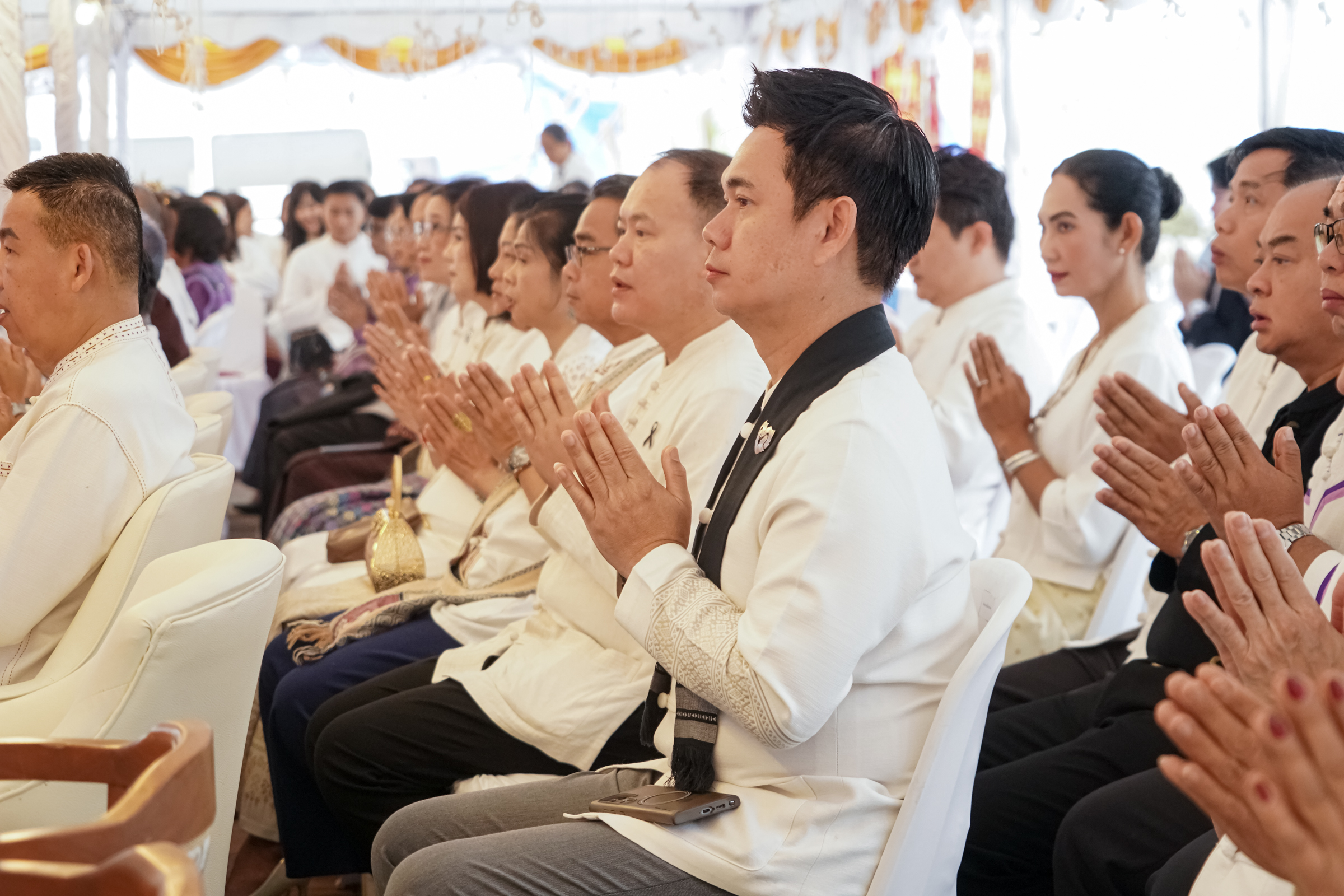
On March 5, 2026, the University of Phayao participated in the annual King Ngam Muang Worship Ceremony, one of the most significant cultural traditions of Phayao Province. Associate Professor Supakorn Pongbangpho, Ph.D.President, University of Phayao, assigned Assistant Professor Wuthichai Chairinkam, Ph.D.Vice President for Student Quality, together with assistant presidents, directors, and staff from the Lanna Arts and Culture Center, the Information and Communication Technology Service Center, the Division of Student Affairs, and the Central Administration Division, to represent the university at the ceremony. The event took place at the King Ngam Muang Monument in Mueang Phayao District, Phayao Province.

The ceremony was presided over by Ms. Oraphapa Lohwira, Governor of Phayao Province, who led the traditional Four Guardian Deities Invocation ritual as part of the worship ceremony. The event was attended by provincial administrators, government officials, military and police personnel, representatives from the private sector, and members of the public. The University of Phayao also participated in the ceremonial tribute and joined more than 2,000 performers in a synchronized Fon Leb (Lanna fingernail dance) performance to the traditional song “Pao Kai Bai,” reflecting the rich artistic heritage of Northern Thailand.
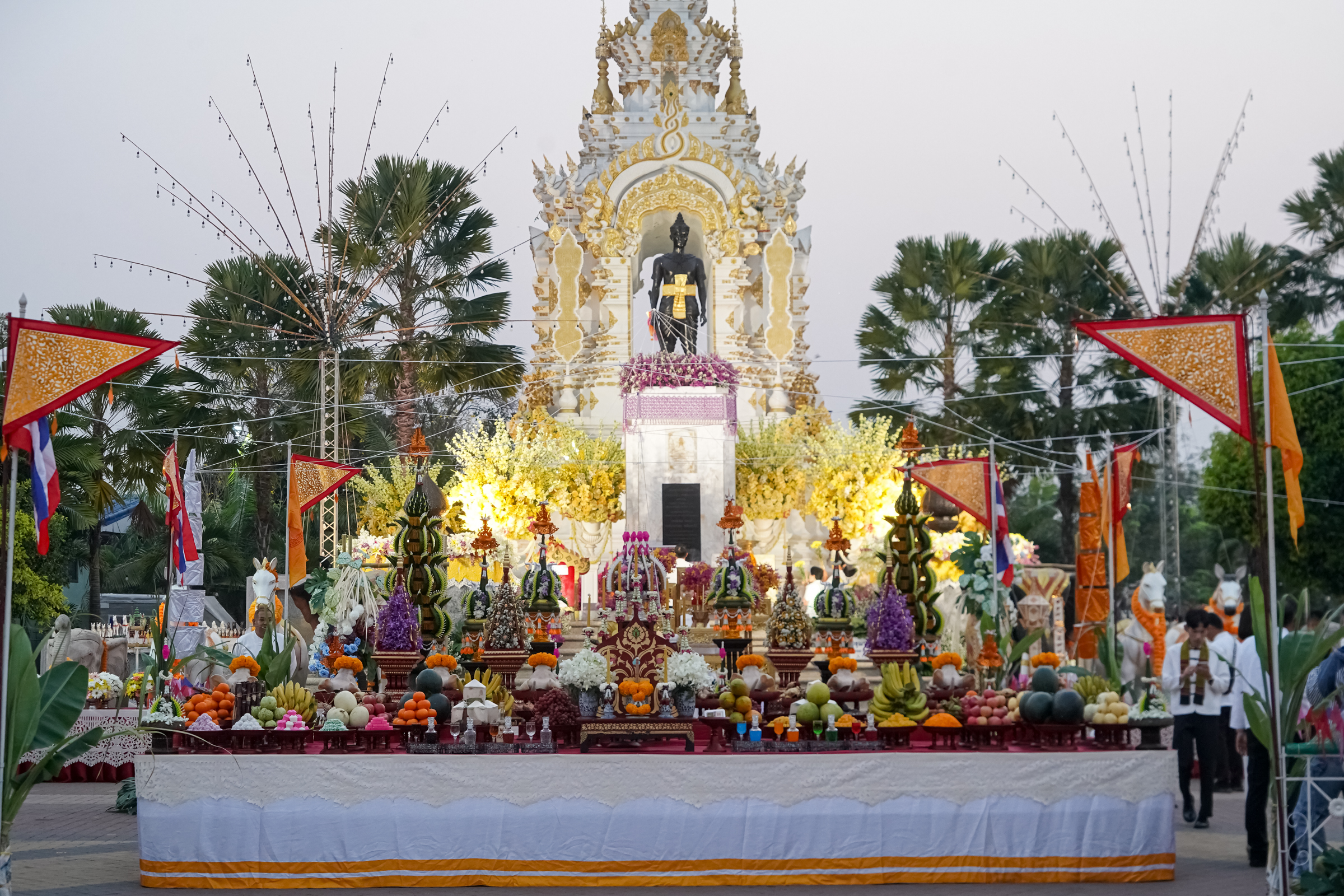
The program included a Buddhist blessing ceremony, during which ten monks chanted sacred prayers to bring prosperity and well-being to the province and its people. Another key highlight was the Suep Chata Kwan Phayao ritual, a traditional Lanna ceremony performed to spiritually revitalize and bless Kwan Phayao, the province’s largest natural freshwater lake and a vital ecological and cultural landmark that has long supported local livelihoods, economic activities, and community life.
Held annually as part of the King Ngam Muang Festival and the Phayao Red Cross Fair, the ceremony commemorates the legacy of King Ngam Muang, the historical ruler of Phayao who played a crucial role in the establishment and development of the city. The event also reflects a collective commitment among local institutions, communities, and cultural organizations to safeguard and transmit the region’s Lanna heritage, traditions, and cultural identity to future generations.